


Care after loss · 4 MIN READ
After pregnancy loss: offering care without rushing grief
Practical ways to support someone after miscarriage or baby loss, with space for physical recovery, privacy and different ways of grieving.

After a miscarriage or baby loss, there can be a painful gap between what someone needs and what others know how to offer. Friends may worry about saying the wrong thing. The person grieving may be tired of explaining, may want to talk, or may not know what would help from one day to the next.
There is no sentence that makes a loss acceptable and no treatment that puts grief on a predictable timetable. What you can offer is attention, practical help and room for the person to set the pace. This guide is for someone seeking support and for the people who want to care for them.
Leave room for their words, and for silence
A simple acknowledgement is often more useful than a hopeful explanation. “I am sorry. I am here if you want company” does not ask the person to find a positive side. Avoid statements that begin with “at least” or suggest that another pregnancy could replace the one they have lost.
Ask whether they would like to talk, sit quietly or be left to rest. Their answer may change. You do not need to ask for medical details, and you should not share their story with others unless they have agreed. Privacy can be an important form of care.
Remember that physical recovery still needs attention
Pregnancy loss can involve physical recovery as well as grief, and care needs differ according to the circumstances. Follow the advice of the treating team and ask them about symptoms or recovery concerns. Feeling emotionally ready for an activity does not remove the need to consider physical healing.
If someone is worried about their symptoms or feels unwell, encourage them to contact their healthcare team. Offer practical help with an appointment if they want it. A spa treatment, retreat or wellness package should never be used instead of follow-up or an assessment of a concern.
Offer something specific and easy to decline
“Let me know if you need anything” is kind, but it leaves the planning with the person who may have the least capacity for it. Try a small, specific offer: bringing a meal, helping with transport or collecting something they need. Say clearly that it is fine if the offer is not useful.
- “I can drop dinner at the door tomorrow; would that help?”
- “Would you like company on the journey, or would you prefer privacy?”
- “I can handle this one task if you want to leave it with me.”
- “You do not need to reply today. I will check in gently another time.”
Do what you have offered reliably. Consistency is often more helpful than a large gesture that requires the person to organise other people around it.
Do not turn support into a recovery deadline
There is no need to ask whether someone feels better yet or to treat a return to work as proof that grief is over. Important dates, conversations and ordinary places can affect people differently. Keep your invitation open without requiring updates on progress.
Partners and family members may also need support and may grieve differently. Avoid assuming that one person’s quieter response means they are unaffected. Let each person say what they need without comparing who appears to be coping best.
Ask before arranging a wellness experience
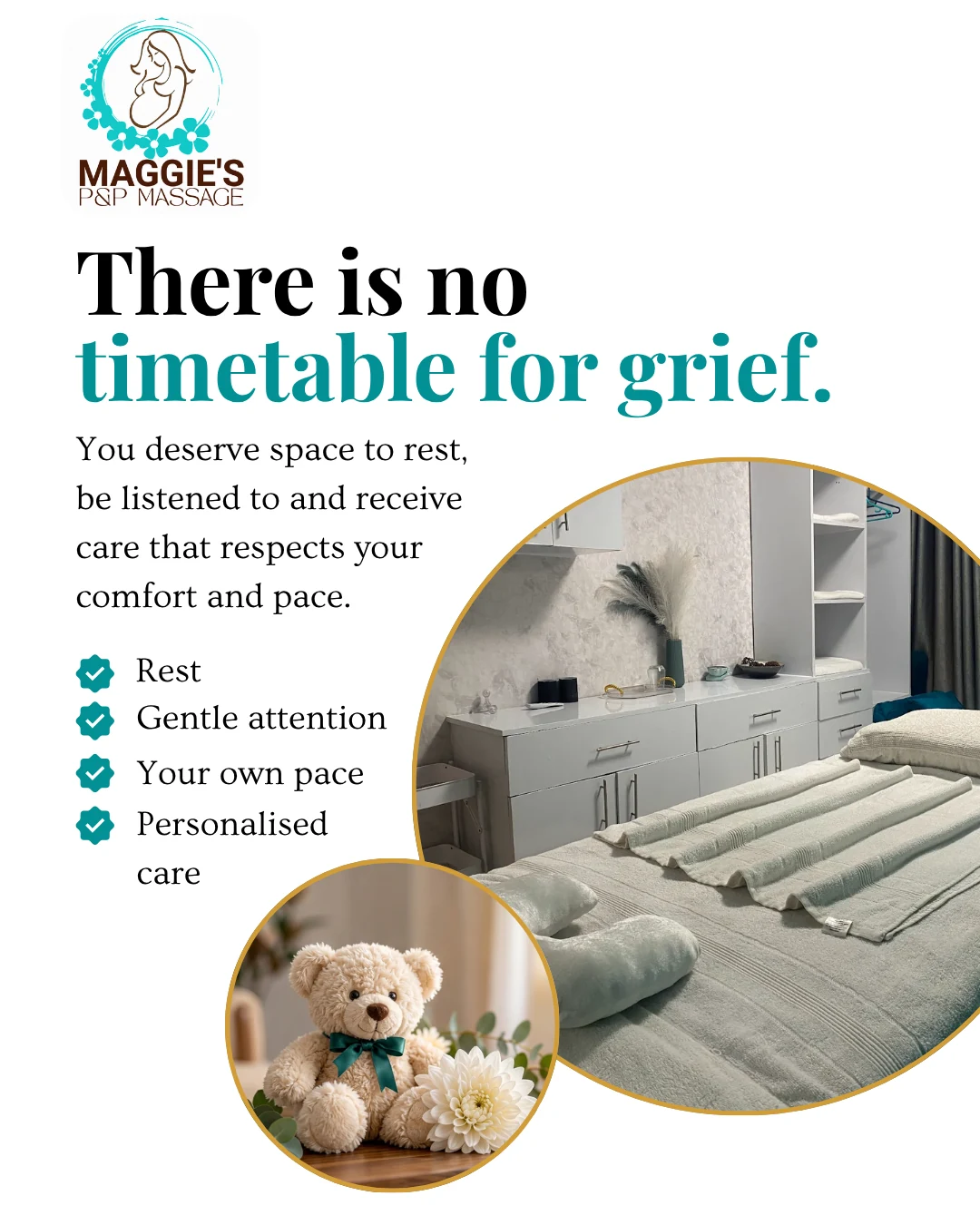
Some people would welcome a calm setting and gentle personal care. Others may find touch, travel or a maternal spa environment difficult at that time. Ask before purchasing or scheduling something in their name. A caring gift should not create a new obligation to attend or explain why they cannot.
Maggie’s Harmony After Loss guide explains a wellness option for rest and comfort. It includes a suitability conversation and can complement other support. It is not bereavement counselling, a promise of emotional healing or a replacement for medical care.
Make professional support part of the conversation
A clinician can help with physical recovery concerns and discuss counselling or appropriate bereavement support. If coping is becoming difficult, asking for professional help is a reasonable next step. It does not mean that support from friends or family has failed.
You can offer to help find information while leaving the choice with the person. Avoid taking over personal decisions because you want to make the situation easier. Support works best when it increases someone’s room to choose rather than reducing it.
If you are the person receiving care
You are allowed to set boundaries around visits, questions, messages and touch. You do not owe anyone a detailed account of what happened. You can accept one kind of help and decline another, even when both were offered with love.
If you would like to ask about quiet wellness care, contact Maggie’s privately through the contact page. You can request information without booking. Whether you choose a spa visit, professional support, company at home or none of these today, your pace deserves respect.
Being cared for does not require you to demonstrate that you are moving on.
A FEW COMMON QUESTIONS
Good to know.
Should I surprise someone with a care-after-loss treatment?
Ask first. The person’s readiness, preferences and physical recovery should guide any booking.
Is wellness care a replacement for counselling?
No. A spa experience can offer time for comfort and rest, but it does not provide medical or professional bereavement care.
FURTHER READING
Sources & useful information
These resources inform the health context in this guide. They do not imply endorsement of Maggie’s or a medical review of this article.
Prepared by the Maggie’s Spa editorial team. General wellbeing information; not personalised medical advice. Treatments depend on individual suitability. Prices and availability can change; confirm them when booking. Questions or corrections?