


Initial wellness consultation
Talk through your delivery, symptoms, comfort goals and any previous assessments.

Understanding abdominal separation
A tummy that still feels weak, domes in the middle or changes how you move can raise questions after pregnancy. Our diastasis recti support starts with listening, explaining the difference between wellness care and rehabilitation, and helping you identify the right next step.
Karen 31 Collective, Ngong Road, Nairobi · Home visits by arrangement

Understanding your care
During pregnancy, the connective tissue between the two sides of the front abdominal muscles stretches as your baby grows. A persistent widening is commonly called diastasis recti, or abdominal separation. It can follow either a vaginal delivery or a C-section.
A change in tummy shape alone does not tell us how well your abdominal wall works. The important questions include strength, comfort and everyday function: getting out of bed, carrying your baby and returning to activity. A qualified assessment helps distinguish these concerns from other causes of a bulge or pain.
Care at Maggie’s
Talk through your delivery, symptoms, comfort goals and any previous assessments.
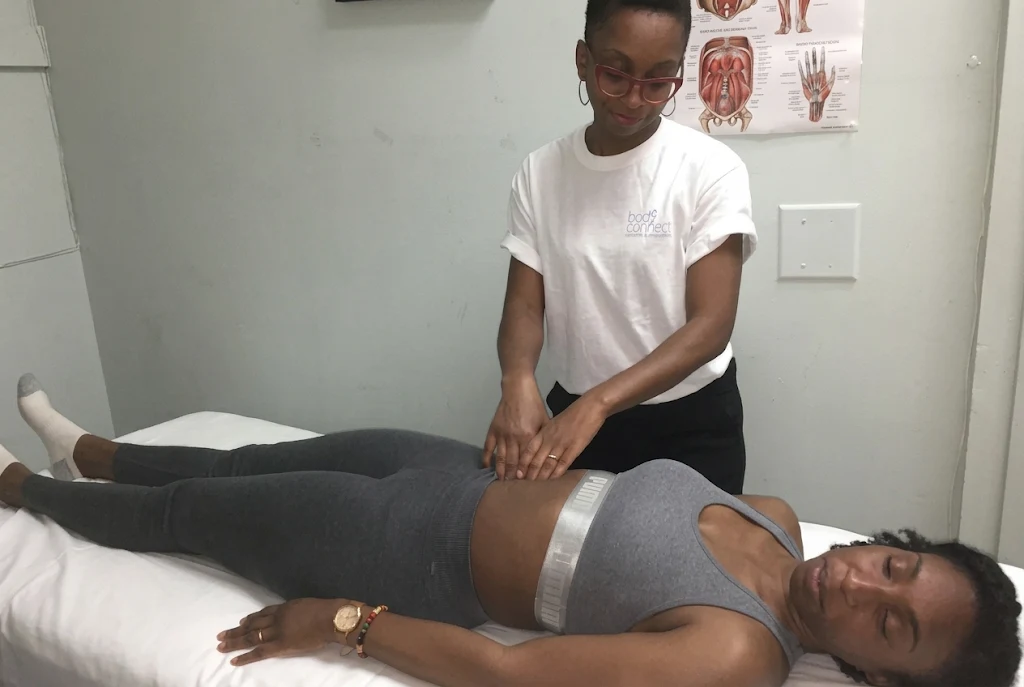
A qualified physiotherapist can assess abdominal function and plan individual deep-core rehabilitation and progressive strengthening.
Review your comfort goals and any clinician’s advice. Massage may be adapted for relaxation alongside your rehabilitation plan.
Why this care matters
Describe doming, weakness, discomfort or movement difficulties without having to diagnose yourself first.
An individual rehabilitation plan can address coordination and strength in ways that cosmetic belly care cannot.
Separate relaxation, skincare and optional binding from the clinical assessment and exercises your physiotherapist recommends.
What to expect
Discuss changes, delivery history and your everyday comfort goals.
A suitable clinician assesses abdominal function and advises on rehabilitation.
Progress the clinical exercise plan as advised; choose separate spa support only when suitable.
You may notice a ridge or dome down the middle of the abdomen, a feeling of weakness, persistent bulging or difficulty with certain movements. Some women also report back or pelvic discomfort. These symptoms have different possible causes, so the purpose of a consultation is to understand your concern and suggest an appropriate assessment, not to diagnose from a photograph.
Abdominal rehabilitation is about how your body manages daily movement and pressure, not only the appearance of a gap. A qualified professional can assess the abdominal wall, breathing and pelvic-floor coordination, then tailor a progressive plan to your recovery and activity goals. There is no single exercise routine or treatment length that suits everyone.
We offer a wellness conversation, education and referral guidance. Suitable massage for surrounding muscle comfort may be discussed separately, while respecting your clinician’s advice. Formal diagnosis, measurement and rehabilitation are provided by an appropriately qualified healthcare professional. We do not present spa massage as a way to close separated abdominal muscles.
Pregnancy stretches the abdominal wall regardless of delivery type. After surgery, scar and tissue healing add further considerations. Share your delivery history, current symptoms, prior assessment and medical restrictions before selecting a session. Persistent or worsening pain should be assessed rather than worked through with stronger massage.
Your questions
No. A binder is optional external support and does not replace assessment or an individual rehabilitation programme.
Let’s help you choose
Ask about suitability, available sessions and home visits before confirming. Please keep detailed medical information for a private consultation.

Our treatments are created for wellness, relaxation and recovery. They do not replace medical care.
If you have a condition that may be affected by treatment, we may request a doctor’s note confirming that it is safe to proceed.
Please consult your healthcare provider before alternative therapies, especially during a high-risk pregnancy or while managing a chronic illness.
Share relevant symptoms, medication and medical advice with your therapist so we can adapt your session safely.
Unsure whether a treatment is right for you?
Talk to our team